
This full-body toning workout hits all the major muscle groups in just 30 minutes, and is perfect for people who want to strengthen their muscles!
Full Body Toning Workout
Self Help & Network Management, Wellness, Fitness, Spa
This full-body toning workout hits all the major muscle groups in just 30 minutes, and is perfect for people who want to strengthen their muscles!
Full Body Toning Workout
insider@insider.com (Madeline Kennedy,Samantha Cassetty,Katie Walsh)

The ketogenic diet – keto for short – is a restrictive diet where you replace carbs with fatty foods. For example, carb-rich foods like bread, rice, and potatoes are usually eliminated, or severely reduced, because they’ll easily tip you over the limit of 20-50 grams of carbs per day. Meanwhile, low-carb fatty foods, protein, and non-starchy veggies are prioritized.
There’s some variation of the keto diet, so there is some wiggle room for catering it to your particular lifestyle and eating preferences. Here are six different types of the ketogenic diet:

‘Tis the month of commitment overload—but these quick moves will keep you feeling strong no matter how insane your holidays may be.

The holidays might look a little different this year, but you can count on at least one seasonal standby: The unrelenting hustle and bustle as you prep for the celebrations. Between last-minute shopping, wrapping presents, tying up end-of-year tasks and FaceTiming with faraway family, fitting in your regular workout can be a tall order. But the holiday frenzy doesn’t have to force you to skimp on your fitness regimen. Instead of a long sweat session, opt for mini workouts that maximize your efforts—and help to keep you balanced during the busiest stretch on the calendar. “Even if you just have a few minutes, those few minutes of exercise will keep you in the mindset of moving towards your goals and not getting stuck in a rut,” says Brittany Watts, a trainer at Performix House in New York City.
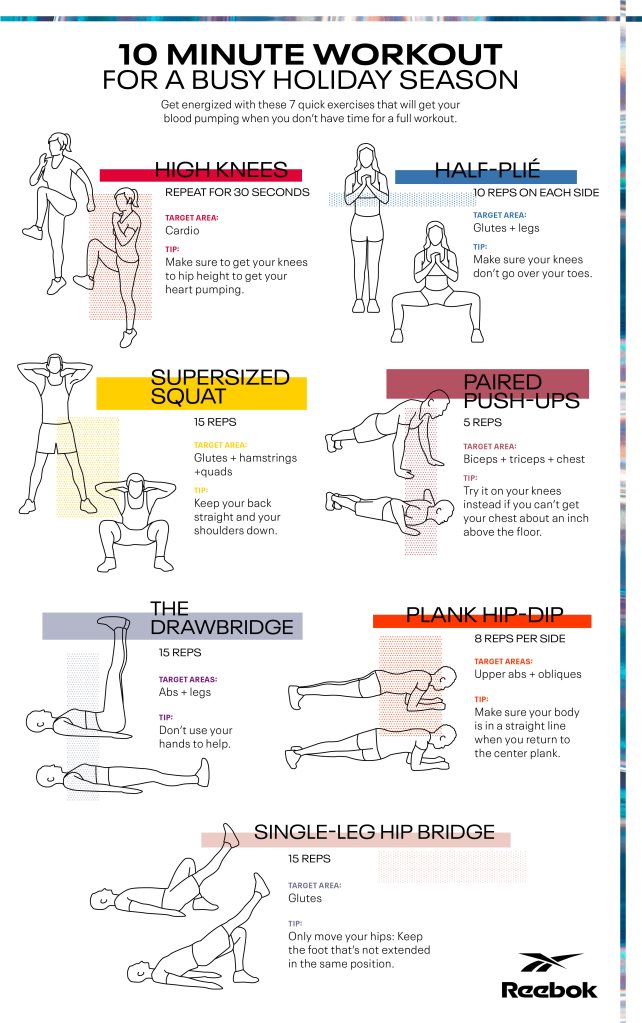
Slip on your favorite comfy clothes and follow Watts’ tips below for a 10-minute workout made up of the moves she swears by. Each of the seven exercises she recommends can be completed in a little more than a minute (while you wait for the coffee to brew, take a moment between Zoom calls or preheat the oven). You can do them all at once, break them up or select a new duo to cycle through at different points during your day. No matter what mix works for you, by committing to these exercises, says Watts, “you’ll definitely get a good sweat in.”

Blanca Blanco shared her thoughts on the latest Peloton bike that put her back $2,400.
On Thursday evening, the Tale Of Tails actress took to Instagram to share images of herself on the bike while giving it a review. Turns out the workout machine works wonderfully, but cannot compare to sessions at Equinox gym in Los Angeles, which is closed due to the statewide lockdown.

 Studio-7-West