So what is the difference between almond butter and almond paste? The main difference is that almond butter is made almost purely from the nuts alone, whereas almond paste includes other ingredients, primarily sugar.
This simple difference leads to quite a lot of variety between the two products and, in this article, we’ll take a deeper look into what this means and how to use them each properly.
Almond Butter
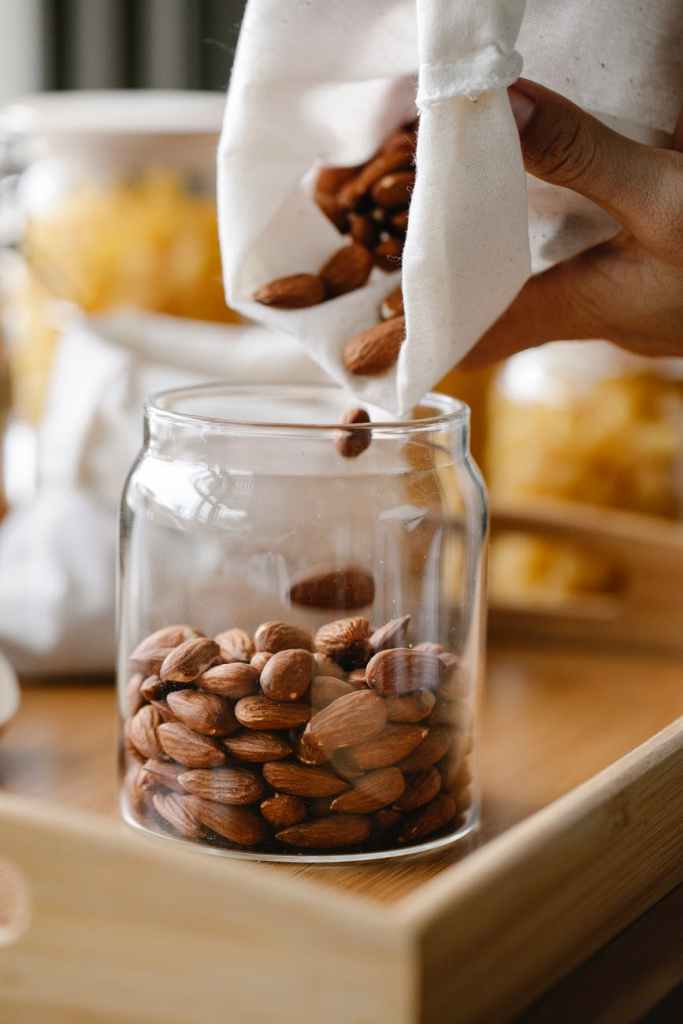
Almond butter is a simple paste made primarily from almonds, usually roasted. Depending on the maker, there may be sugar or oil added, and some manufacturers or home butter makers will also use raw almonds.
Almond butter is essentially the same as peanut butter, only made with a different nut. We love Justin’s Almond Butter.
There are many different variations around the web you will stumble across. Some will use sour cream in place of cream cheese while others will omit the use of any creamy product altogether.
I personally think it’s a game changer as it thickens up the soup quite a bit and makes it so much heartier and comforting! 😉
This was my first time cooking with white beans, and I fell in love with them. They seem to be a bit nuttier and more earthy than other beans I’ve used in chili recipes like kidney beans.
Home » Diet » Dairy Free » Instant Pot White Chicken Chili (Dairy Free!)
This Instant Pot white chicken chili is going to make you forget all about red-colored chili you’ve been making on repeat. It’s made with white beans, juicy chicken thighs, hatch green chiles, and corn. The recipe is warm, comforting, and delicious. It is also easy to make, healthy, gluten free and dairy free.
If you don’t own an Instant Pot, I’ve provided stovetop instructions for you as well!
Sophie absolutely demolished a bowl while barely allowing herself to breathe in between spoonfuls. The same can be said about Tim actually.
I always get annoyed with him because he pretty much adds hot sauce to every single dish I make, but I noticed he ate this without any accompaniments, and that made me very happy.null
It’s incredibly flavorful, and I give homage to the blend of spices, green chiles, and delicious broth for doing the trick.
I have provided instructions for you to either:
Use pre-shredded / Rotisserie chicken
Make Instant Pot shredded chicken thighs (my own recipe!)
null
How Do You Thicken Up White Chicken Chili?
The secret (not so secret) ingredient to thickening up most white chicken chilis is cream cheese!
What’s pretty incredible is that I found success in using a dairy free cream cheese.
I used Kite Hill dairy free cream cheese, but feel free to use regular cream cheese if you are able to consume dairy.null
A few other recipes from around the web for dairy free white chicken chili that omit cream cheese altogether include:
This particular chili recipe is mixed with: white beans, green chiles, shredded chicken, broth, lime, various spices, corn, onions, and dairy free cream cheese.null
There are many different variations around the web you will stumble across. Some will use sour cream in place of cream cheese while others will omit the use of any creamy product altogether.
I personally think it’s a game changer as it thickens up the soup quite a bit and makes it so much heartier and comforting! 😉
This was my first time cooking with white beans, and I fell in love with them. They seem to be a bit nuttier and more earthy than other beans I’ve used in chili recipes like kidney beans.null
How To Make Instant Pot White Chicken Chili
Select the “Sauté” setting on your pressure cooker, and let it heat up for about 2 minutes. Pour in the oil and let that heat up for 1 minute.
Add onions and cook for about 5 minutes, stirring occasionally until they are soft. Next, add in garlic and cook for another minute, stirring often. Add green chiles and spices. Cook for 1 more minute.
Light movement around the house is a great start, but “every minute of higher-intensity activity is associated with better health outcomes than every minute of lower-intensity activity,” says Meyer. “So if you’ve got five minutes, the more you can do in those five minutes, the better.”
If you want to do more intense short workouts, start doing squats, lunges, pushups and planks, McDonald says.
“A lot of bodyweight exercises are really good to do throughout the day, [and] help with circulation.”
If you’ve never done these exercises, she suggests starting with squats.
“That’s a great place for everybody to start,” she says. “Just lean your back against the wall and bend the knees and see how comfortable you feel.”
As for how many squats or lunges we should aim for, she says, “there’s no magic number.” Just fit in as many as you can in the time you have. “Maybe you really only have two minutes. Well, do what you can in two minutes.”
You can try adding some weight to your mini workouts using objects around your house like a can of beans or a sack of sugar, says McDonald. But take care not to grab anything too heavy until you get a sense of your own strength.
If more intense effort feels daunting, remember that “exercise, even at a light intensity, might be giving you the same mental health effects as the higher intensity stuff,” Meyer says. Especially, if you’re depressed and/or not walking around much to begin with. “Doing anything in those five minutes is better than doing nothing.”
McDonald also advises her clients to do some chores during these breaks — anything that involves standing or walking. “I now jump at the chance to even just walk down the hall to take the trash [out] just so I can get out of my seat,” she says.
Personally, I have turned to my two favorite chores — emptying the dishwasher and washing dishes. And McDonald says that’s a good move.
“You’re standing washing your dishes [and it] is going to help your blood flow because you’re not sitting anymore,” says McDonald. “You’re using your legs, your muscles, [and] your muscles are asking for that blood flow to start up again.”
Multitask
You can do these exercises even during phone calls or Zoom meetings, says McDonald, as long as you don’t have to be on camera. This is something I’ve tried to do for months now — I try to make sure that I’m either doing a quick exercise or at least moving around or doing chores during meetings where I don’t have to be on camera.
And if you plan to do that, just make sure you mute yourself, McDonald adds. You probably don’t want your colleagues hearing you huff and puff through your workout. “Some people have learned [that] the hard way,” she says.
If it’s hard for you to block out a chunk of time in your day to walk or do any other exercise, try spending just a few minutes every hour exercising, suggests McDonald.
“If you can get five minutes every hour, that’s going to add up throughout the day,” she says.
Just add it to your calendar and set a timer for five minutes, she adds. If you’re working an eight-hour-day, it adds up to 40 minutes a day.
“That’s 40 minutes that you did something, and it wasn’t a 40-minute chunk that you had to pull out of your day,” she says. Health guidelines recommend at least 150 minutes of moderate exercise every week. And those 40-minute daily activities will help add to the weekly goal, she adds.
“I think part of developing a good exercise plan for each of us is knowing ourselves well, knowing what’s feasible,” says Carter. And that includes knowing what’s not realistic for you.
So if you hate running, don’t run just because it’s trendy or someone tells you it’s good for you, says Carter. Or if you’re not a morning person, then don’t plan to exercise in the morning.
And remember, she adds, “getting started is the hardest part.” Don’t blame yourself if you’re struggling to get started. It’s important to have compassion on yourself. “One tenet of self-compassion is this common humanity, that we all struggle at this,” she says.
Try to think of ways that would make it more likely you’ll stick to workout plan, perhaps by building in some external accountability. She suggests arranging with a friend to call or text each other at an agreed on time to spur each other to take a walk or run. Carter used to do it with her friend in the morning, she says and “that would get us going and have that accountability.”
Walk whenever you can
Start by just walking more, says Molly McDonald, a certified personal trainer with Corporate Fitness Works, who I also train with.
“I’ve told a lot of people, if you have space … in your house, walk room to room, use your stairs,” she says. “And if you don’t have stairs, just walking room to room, back and forth, getting those extra steps.”
The good news is that something as simple as some very light movement around the house to break up all that couch surfing time can make a difference in mood, as Meyer’s earlier research has found.
Scores of previous studies confirm that being physically active boosts mood, lowers anxiety and improves sleep quality.
“We know consistently that the more people are active, the more that they exercise, the better their mental health is,” says Meyer.
For many office workers like me, working from home means we’ve fallen into a routine of spending hours at our desk. With another pandemic winter about to hit us and much of the country and the world still dealing with COVID-19, we are often stuck at home more than we’d like, so it’s time to start sitting less and moving around more.
Meyer and other exercise experts shared some tips to get started:
Think small
If you haven’t been working out throughout the pandemic and are intimidated about starting now, don’t worry, says Meyer. Start small.
“If I were to walk around my office, all those steps would count, it would be helpful,” he says.
People trying to start exercising often get caught up in an “all or nothing” thinking, says sports psychologist Jennifer Carter at the Ohio State University.
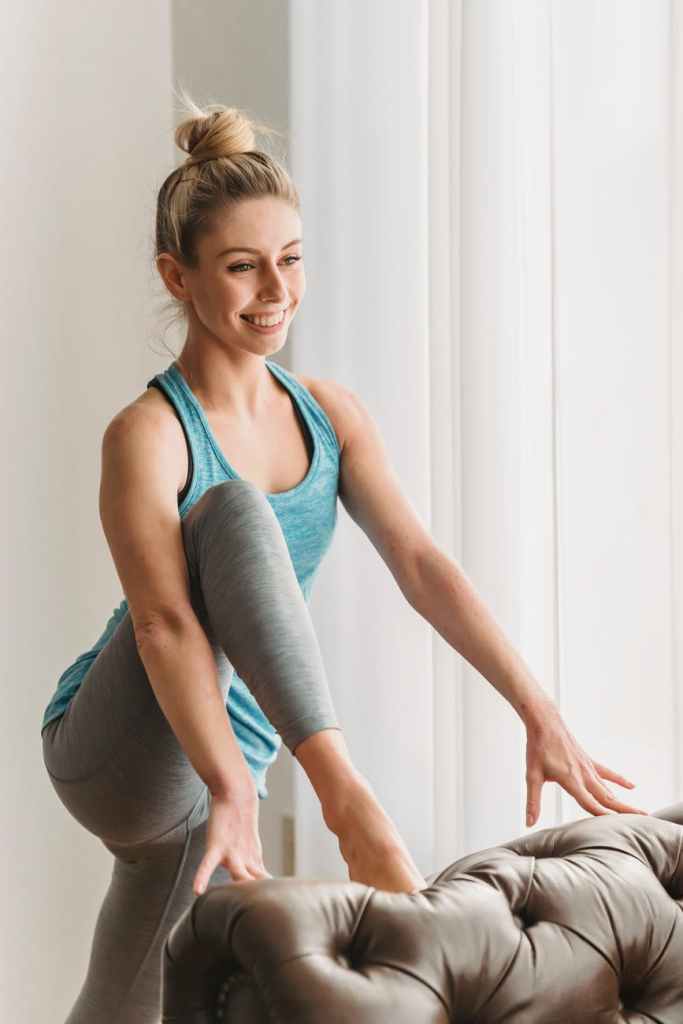
Add five-minute stints of fun and easy exercise to your day at home by working with what’s around you, says trainer Molly McDonald.
Of all the ways in which the pandemic has affected Americans’ well-being, perhaps the one we’ve noticed least is how much we’re sitting. And it’s not just bad for our waistlines — it’s hurting our mental health.
More than a year and a half of social distancing and work-from-home policies have led to less time moving around and more time sitting and looking at screens — it’s a potentially toxic combination that’s linked with poorer mental health.
“The sneaky effects of the pandemic that we might not even notice [is] that we’ve changed our sitting patterns,” says Jacob Meyer, director of the Wellbeing and Exercise lab at Iowa State University.
His own research showed that in the early weeks of the pandemic, people who exercised less and had more screen time were likely to be stressed, depressed and lonely.
And though most people saw their mental health gradually improve as they adapted to a new reality, people who stayed mostly sedentary didn’t see get the same improvement, according to a follow-up study by Meyer. “People who continued to have really high levels of sitting, their depression didn’t improve” as much, says Meyer.























 Studio-7-West