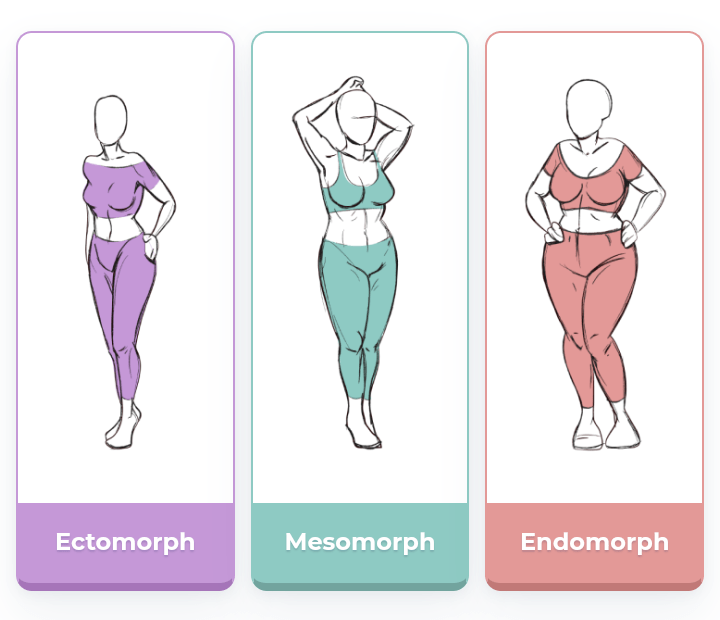
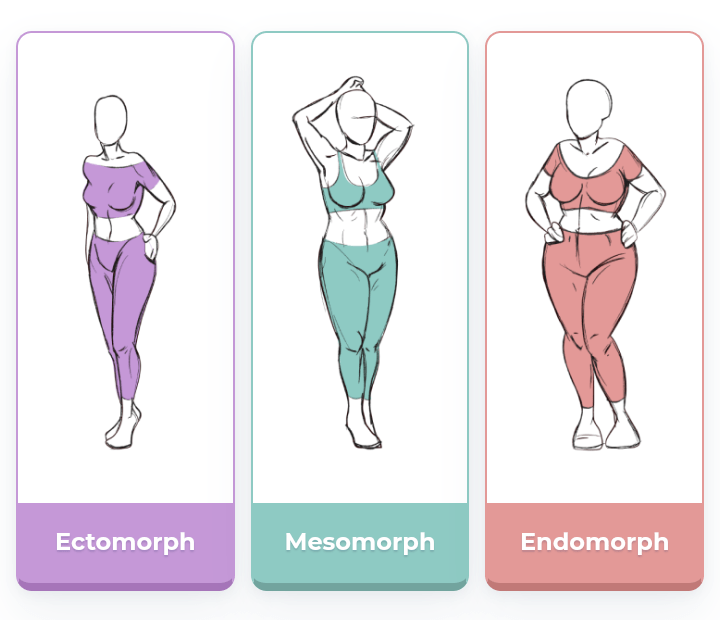
Intermittent fasting (IF) is an eating pattern that cycles between periods of fasting and eating. It doesn’t specify which foods you should eat but rather when you should eat them. In this respect, it’s not a diet in the conventional sense but more accurately described as an eating pattern.Endomorphs are said to have a higher percentage of body fat with less muscle mass. They’re often heavier and rounder, but not necessarily obese. Because of their physical makeup, people with endomorphic bodies are more sensitive to calorie consumption than people with other body types.The ectomorph is one of the three most common body types (somatotypes), characterized by a “thin frame” and difficulty to gain muscle mass as well as fat. People that belong to this somatotype are usually skinny, lean and have a high metabolic rate.People with a mesomorph body type tend to have a medium frame. They may develop muscles easily
Somatotype is a taxonomy developed in the 1940s by American psychologist William Herbert Sheldon to categorize the human physique according to the relative contribution of three fundamental elements which he termed ‘somatotypes’, classified by him as ‘ectomorphic’, ‘mesomorphic’ and ‘endomorphic’.
What does this have to do with exercise? “Stressing the heart can worsen heart inflammation — and such stress occurs with exercise,” says Richard Wright, MD, a cardiologist at Providence Saint John’s Health Center in Santa Monica, California (unaffiliated with the study). “Covid-19 victims should be rigorously tested to ensure their heart is normal prior to resuming exercise.”
Study author Valentina Puntmann, MD, PhD, recommends Covid-19 patients undergo a cardiac MRI to investigate potential cardiac inflammation. “Until we know more, our advice to our nonprofessional athletes is to take it easy for a minimum of six months,” she says.
Easy doesn’t mean nothing; exercise is still an excellent way to stay healthy. In fact, regular exercise may reduce the risk of acute respiratory distress syndrome, a major cause of death in Covid-19 patients, per research in Redox Biology. Talk to your doctor before restarting workouts, and maybe opt for lower-intensity exercise like gentle cycling, yoga, or just walking.
Exercisers often push through pain when it comes to minor injuries or colds, but working out with even mild Covid-19 is looking to be a bad move.
According to a study published in JAMA Cardiology,Covid-19 patients are at risk for heart problems. When researchers performed cardiac MRI testing on 100 adults two to three months after Covid-19 recovery, 78 had structural changes to their hearts, and 60 had myocarditis — inflammation of the heart muscle that can lead to abnormal heartbeat, heart failure, and sudden death.
Those are serious issues, yet no participant had “serious” Covid-19 cases. Half experienced mild to moderate symptoms, 18% were asymptomatic, and noneexperienced heart-related symptoms.
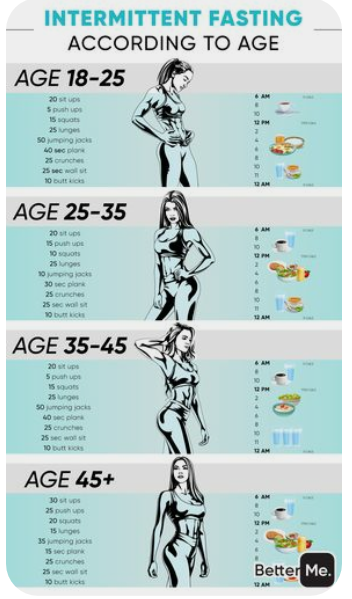
Intermittent fasting (IF) is an eating pattern that cycles between periods of fasting and eating. It doesn’t specify which foods you should eat but rather when you should eat them. In this respect, it’s not a diet in the conventional sense but more accurately described as an eating pattern.









 Studio-7-West